

30 vs. 60: The Science of Efficiency in Assisted Stretching
In a world obsessed with “more is better,” we often assume that spending more time on a yoga mat or a foam roller is the only way to see results. But when it comes to the body’s neuromuscular system, efficiency beats duration every time.
At Stretch Zone, our recent research study—The Stretch Zone Effect—has redefined how we look at the clock. Whether you have 30 minutes over a lunch break or 60 minutes for a deep-dive recovery session, the magic isn’t just in the minutes; it’s in the method.
The Efficiency Gap: Why Traditional Stretching Plateaus
Most people don’t have an hour to stretch alone, and even if they did, “DIY” stretching often hits a wall. This is known as the Efficiency Gap. When you stretch yourself, your body naturally fights back through:
- Poor Angles: Without a practitioner, it’s physically impossible to reach the optimal leverage for certain muscle groups.
- Inconsistent Pressure: Your brain instinctively stops you from pushing into a productive stretch to “protect” you.
- Lack of Stabilization: If your hips aren’t locked down, your back compensates, meaning you aren’t actually stretching the muscle you intended to target.
30 Minutes vs. 60 Minutes: What Does the Data Say?
While a 30-minute session is a powerful “maintenance” tool for busy professionals, our research found a clear “dose-response” relationship regarding session length and frequency.
The Research Insight: According to the findings of The Stretch Zone Effect study, participants who committed to 60-minute sessions twice a week saw the most significant gains in overall range of motion and functional mobility.
Why 60 Minutes Wins for Long-Term Gains:
- Systemic Reset: It takes time for the nervous system to move from “fight or flight” into a parasympathetic state where muscles truly let go.
- Cumulative Range: A longer session allows our practitioners to address the entire kinetic chain—working from your ankles up to your neck—rather than just “putting out fires” in one tight area.
- The 25% Advantage: Participants in the 60-minute high-frequency group saw roughly 25% greater gains in flexibility compared to those in the lower-frequency groups*.
The Stabilization Factor: Stretch Zone vs. Solo
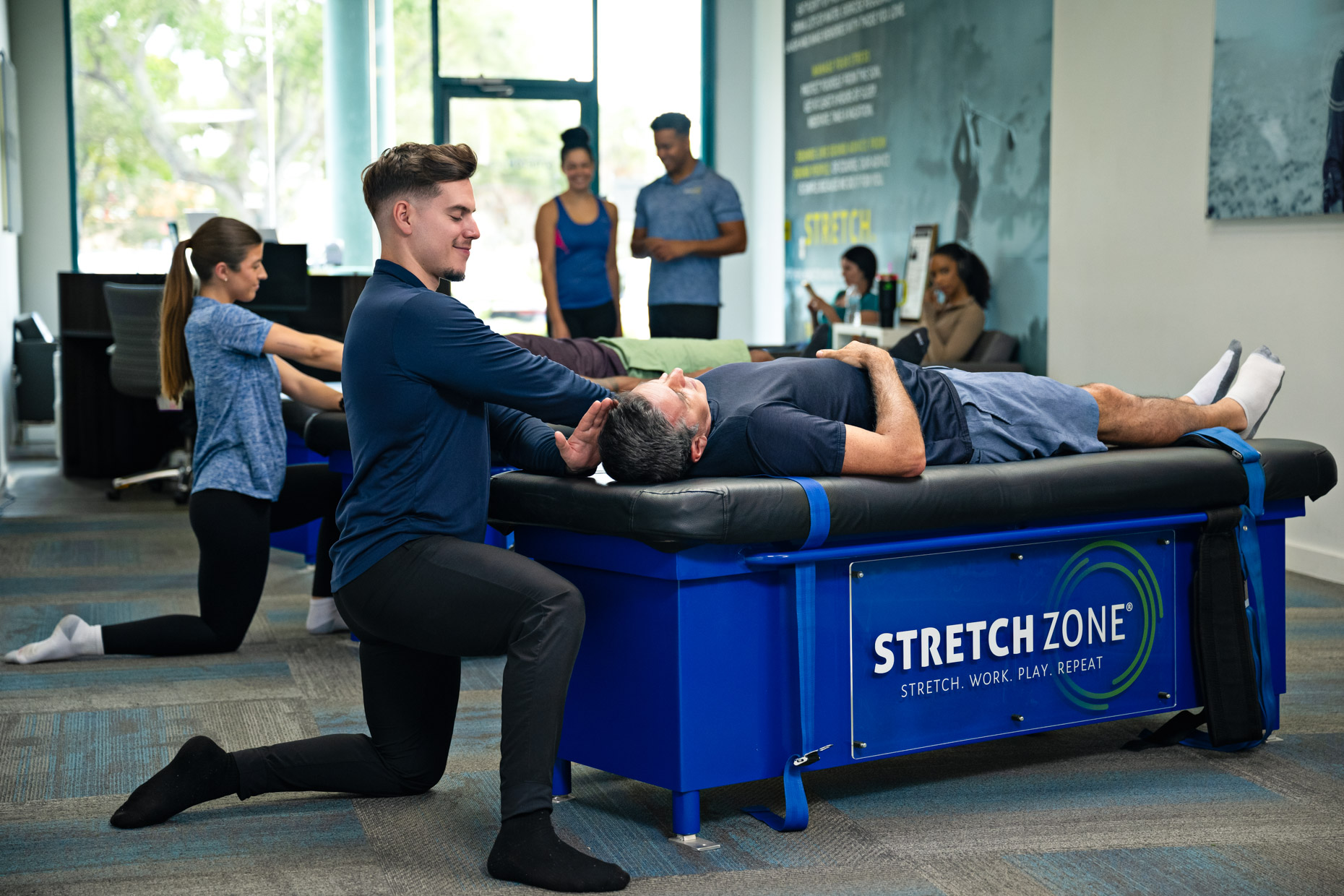
Why does 30 minutes with us outperform an hour of stretching on your own? It comes down to our proprietary stretch protocols and a patented strapping system.
By using a patented strapping system, we isolate specific muscles. When your body is stabilized, your nervous system feels “safe.” This allows us to bypass the stretch reflex—the involuntary contraction that happens when you stretch alone—and achieve a deeper, more effective result in half the time.
| Feature | Solo Stretching (60 Min) | The Stretch Zone Method (30-60 Min) |
|---|---|---|
| Effort | High (Active) | Low (Passive/Relaxed) |
| Stabilization | None (Muscles compensate) | Full (Patented Strapping System) |
| Neuromuscular Response | Protective Tension | Nervous System Reset |
| Typical Results | Temporary relief | Long-term mobility & better sleep |
Who Benefits Most?
- Busy Professionals: Just 30 minutes per week can deliver noticeable improvements—helping counteract the effects of sitting, relieving tension, and increasing mobility.
- Active Individuals & Athletes: While 60-minute sessions offer the most comprehensive results, meaningful gains are achievable in as little as 30 minutes weekly. Everyone—from weekend warriors to fitness enthusiasts—can see real progress without committing to longer sessions.
- Older Adults: Assisted, guided sessions make stretching safer and more effective, reducing the risk of strain while improving flexibility and overall mobility.
The Verdict: Quality Over Quantity
The clock matters, but the method matters more. While our data proves that the 60-minute session is the gold standard for those seeking a total body transformation, any time spent in a Stretch Zone session is more effective than an hour of “guessing” on a yoga mat.
Get 60 minutes of results in half the time.
Book Your First 30-Minute Practitioner-Assisted Stretching Session
* Results based on a limited internal study. Individual results may vary.